

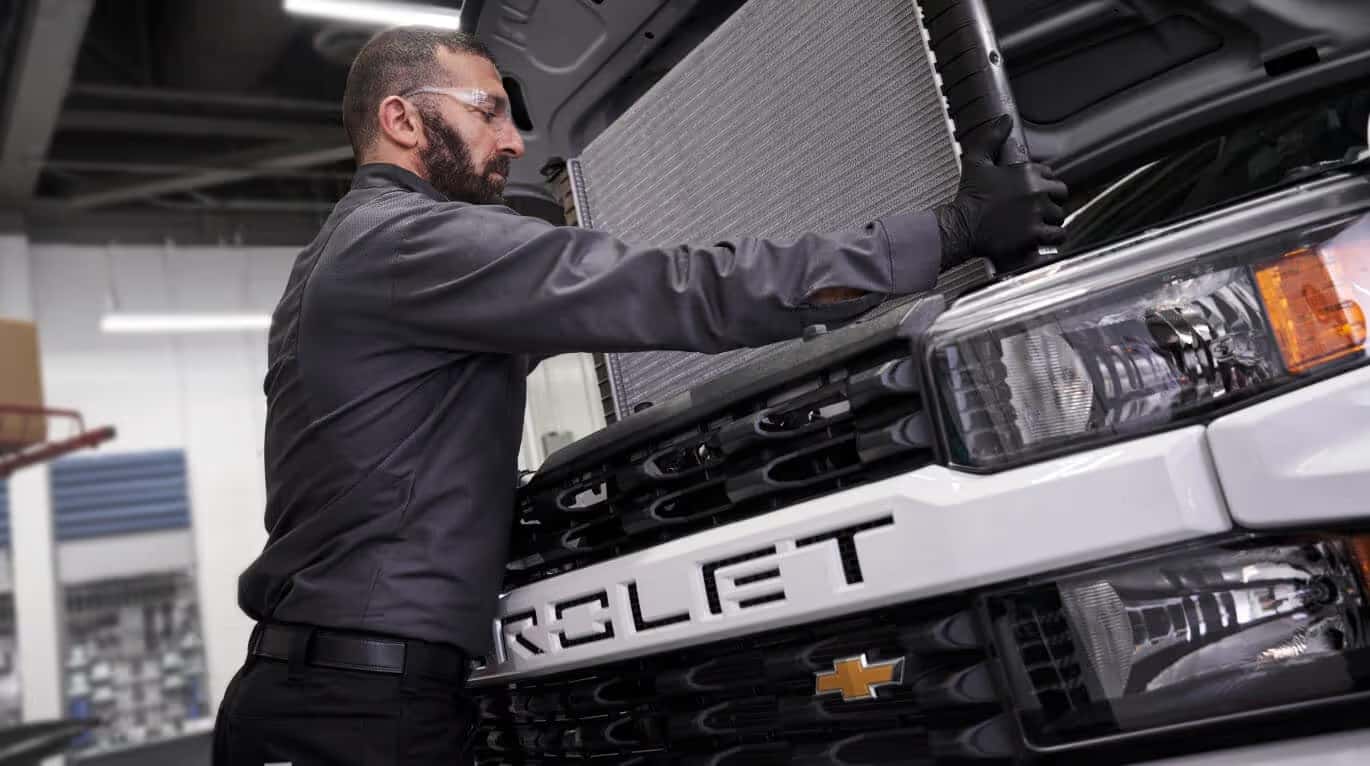
A Chevrolet Silverado 1500 is built to work hard, but no truck runs forever without proper maintenance. Whether you own a 5.3L V8 that tows every weekend or a 2.7L turbo that handles your daily commute through St. Joseph, staying ahead of the maintenance schedule is the difference between a truck that lasts 200,000 miles and one that starts costing you money at 100,000. This guide breaks down every major service interval so you know exactly what's due and when.
Oil Changes and the Oil Life Monitor
Chevrolet equips every modern Silverado with an Oil Life Monitoring (OLM) system that tracks driving conditions—engine temperature, RPM, speed, ambient temperature—and calculates when the oil has degraded enough to warrant replacement. This is not a simple mileage counter. The system adapts to how you actually use the truck.
Under normal driving conditions, most Silverado owners see the oil life indicator trigger between 7,500 and 10,000 miles. Both the 5.3L V8 and 2.7L turbo use Dexos 1 Gen 3 full-synthetic oil (0W-20 for most configurations). If you tow frequently, drive on dusty gravel roads around Savannah and Cameron, or make mostly short trips in cold weather, expect the monitor to trigger closer to 5,000–7,500 miles.
Never ignore the OLM. Skipping oil changes is the fastest way to shorten an engine's life, and the turbo-four is especially sensitive to oil quality since the turbocharger relies on clean oil for lubrication and cooling.
Tire Rotation and Alignment
Chevrolet recommends tire rotation every 7,500 miles or at every oil change—whichever comes first. Trucks wear front tires faster than rears due to steering loads, and 4WD models develop uneven wear patterns if rotations are skipped.
Alignment should be checked annually or whenever you notice the truck pulling to one side, uneven tire wear, or a crooked steering wheel. Missouri's freeze-thaw cycle creates potholes that knock alignment out of spec, and a single hard impact on I-29 can shift the front end enough to chew through a set of tires prematurely. Proper alignment extends tire life by thousands of miles and keeps the truck tracking straight on highway drives between St. Joseph and Savannah.
Brake Pads and Rotors
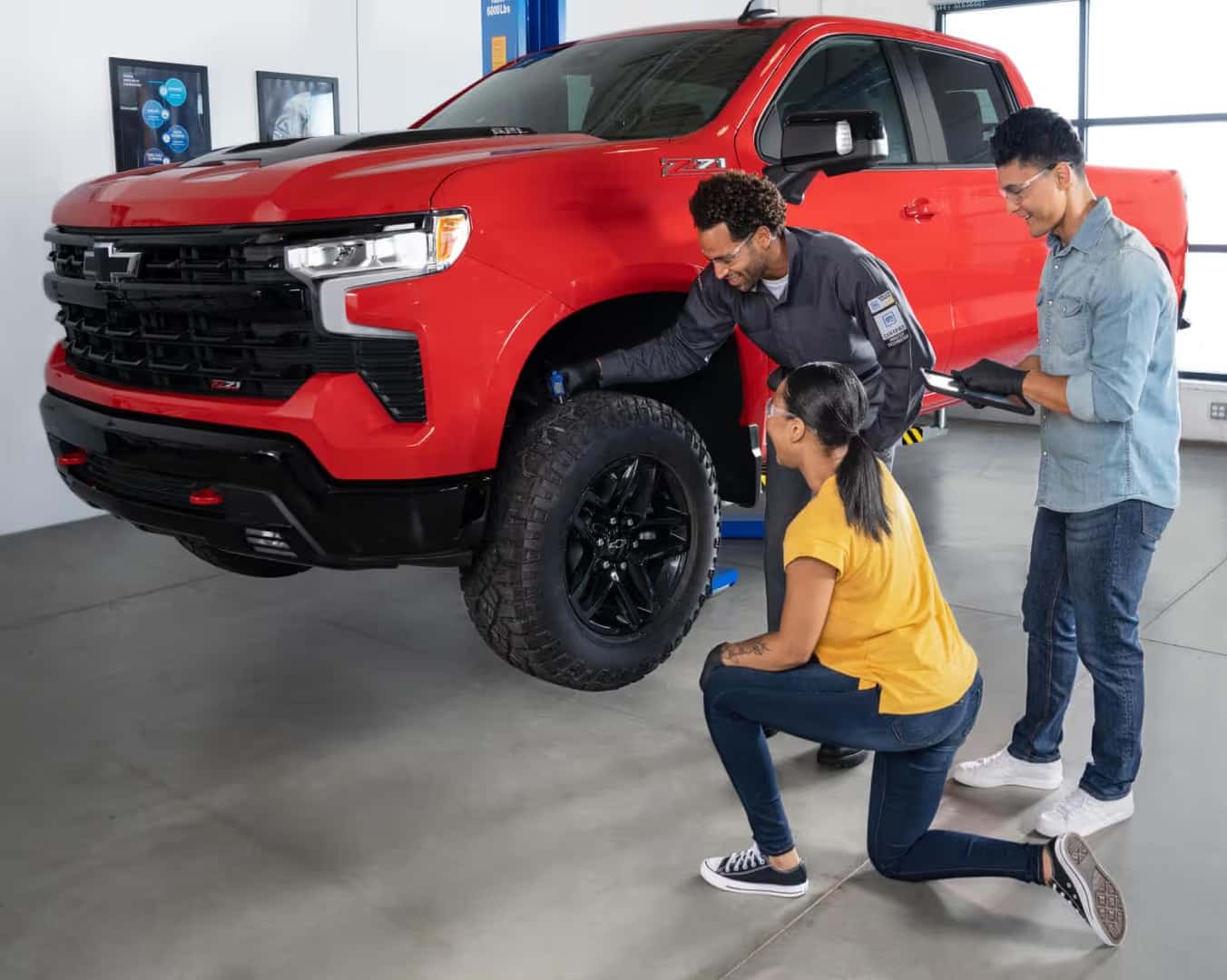
Front brake pads on a Silverado 1500 typically last 40,000 to 60,000 miles under normal driving. Rear pads last longer because the front brakes handle roughly 70% of the stopping force. However, several factors accelerate brake wear significantly.
Towing is the biggest variable. A Silverado hauling a 7,000-pound trailer down a hill uses brakes far harder than one cruising empty on flat highway. If you regularly tow or drive hilly routes, expect front pad life closer to 25,000–35,000 miles. Stop-and-go driving through town has a similar effect.
Listen for high-pitched squealing, feel for pulsing in the brake pedal, and watch for the brake wear indicator on the dashboard. Replacing pads before they wear to metal saves the rotors—and rotor replacement costs significantly more than pads alone.
Transmission Fluid
The Silverado's 8-speed (with the 5.3L V8) and 8-speed (with the 2.7L turbo) transmissions rely on clean fluid for smooth shifting and heat management. Chevrolet recommends replacing the transmission fluid at 45,000 miles under normal driving conditions. Under severe conditions—frequent towing, heavy hauling, or hot-weather operation—that interval drops to 30,000 miles.
Transmission fluid degrades with heat, and towing generates substantial heat. Trucks that spend their lives on the highway with no trailer can often stretch fluid life. Trucks that tow a boat to Smithville Lake every weekend cannot. If you're unsure, a fluid condition check during your next service visit at Reed Chevrolet takes minutes and tells you exactly where you stand.
Transfer Case and Differential Fluid
Four-wheel-drive Silverados have a transfer case and front and rear differentials, each requiring periodic fluid replacement. Chevrolet's recommended interval is 45,000 miles for normal use and 30,000 miles for severe conditions.
Transfer case and differential fluid changes are easy to overlook because these components operate silently when healthy. When the fluid breaks down, however, you'll hear whining from the differentials, feel roughness when engaging 4WD, and eventually face gear damage that costs thousands to repair. For truck owners in Cameron and Savannah who use 4WD regularly on gravel and dirt roads, staying on the severe-condition schedule is worth the insurance.
Coolant, Spark Plugs, and Long-Interval Items
Some maintenance items have intervals long enough that they're easy to forget. These are the services that typically come due once or twice across the truck's lifetime.
- Engine coolant: Replace at 150,000 miles or 5 years, whichever comes first. Dex-Cool extended-life coolant is factory fill. Check coolant level and condition at every oil change.
- Spark plugs: Replace at 97,500 miles for the 5.3L V8. The 2.7L turbo may have a shorter interval due to higher combustion pressures—consult your owner's manual for the specific recommendation.
- Air filter (engine): Inspect at every oil change, replace as needed. Dusty conditions around Missouri's rural roads can clog a filter faster than the standard schedule anticipates.
- Cabin air filter: Replace every 22,500 miles or sooner if you notice reduced airflow from the HVAC system.
- Fuel filter: Gasoline Silverados use a lifetime in-tank filter that doesn't require scheduled replacement under normal conditions.
Severe vs Normal: Which Schedule Applies to You?
Chevrolet defines severe driving conditions as any of the following: frequent towing or hauling, driving on dusty or unpaved roads, extended idling, short trips under 5 miles in cold weather, and operating in extreme heat or cold. If any one of these applies to you regularly, the severe maintenance schedule is the one to follow.
For truck owners in the St. Joseph area, the reality is that most people qualify for at least one severe condition. Gravel roads, cold-start winter commutes, and weekend towing are all common. Using the severe schedule as your baseline adds modest cost to each service interval but dramatically reduces the risk of expensive repairs as the truck ages.
"The difference between the normal and severe schedule on a Silverado is roughly $200–$400 per year in additional fluid changes. That's a fraction of what a transmission rebuild or differential replacement costs."
Key Takeaways
- Trust the Oil Life Monitor but expect changes every 7,500–10,000 miles (normal) or 5,000–7,500 miles (severe)
- Rotate tires every 7,500 miles to prevent uneven wear on 4WD trucks
- Front brake pads last 40,000–60,000 miles normally but 25,000–35,000 miles with frequent towing
- Transmission fluid is due at 45,000 miles (normal) or 30,000 miles (severe)
- Most St. Joseph-area truck owners should follow the severe maintenance schedule
Frequently Asked Questions
How often should I change the oil in my Silverado 1500?
Chevrolet uses an Oil Life Monitoring system that calculates oil change intervals based on driving conditions. Most Silverado owners see the indicator trigger between 7,500 and 10,000 miles under normal conditions. Severe use—frequent towing, dusty roads, or short trips—may reduce that to 5,000–7,500 miles.
When should I replace the transmission fluid in a Silverado?
Chevrolet recommends replacing the transmission fluid at 45,000 miles under normal driving conditions. If you tow frequently or drive in severe conditions, the interval drops to 30,000 miles. The 8-speed automatic transmission is sensitive to fluid quality.
What is considered severe driving for Silverado maintenance?
Severe driving includes frequent towing or hauling, driving on dusty or unpaved roads, extended idling, short trips under 5 miles in cold weather, and operating in extreme heat. Many truck owners in Missouri qualify for at least one severe condition.
How long do brake pads last on a Silverado 1500?
Front brake pads on a Silverado 1500 typically last 40,000 to 60,000 miles under normal driving. Frequent towing, hilly terrain, and stop-and-go driving can reduce pad life to 25,000–35,000 miles. Rear pads generally last longer since the front brakes handle most of the stopping force.
Schedule Service at Reed Chevrolet
Keeping your Silverado on schedule is easier when you have a service team that knows these trucks inside and out. At Reed Chevrolet of St. Joseph, our certified technicians service Silverados every day—oil changes, brake jobs, transmission flushes, and everything in between. We use genuine GM parts and Dexos-approved fluids to keep your warranty intact and your truck running the way Chevrolet intended.
Schedule your next service appointment online or call our service department. We serve truck owners from across St. Joseph, Savannah, and Cameron—and we'll make sure your Silverado stays on the road for the long haul.